

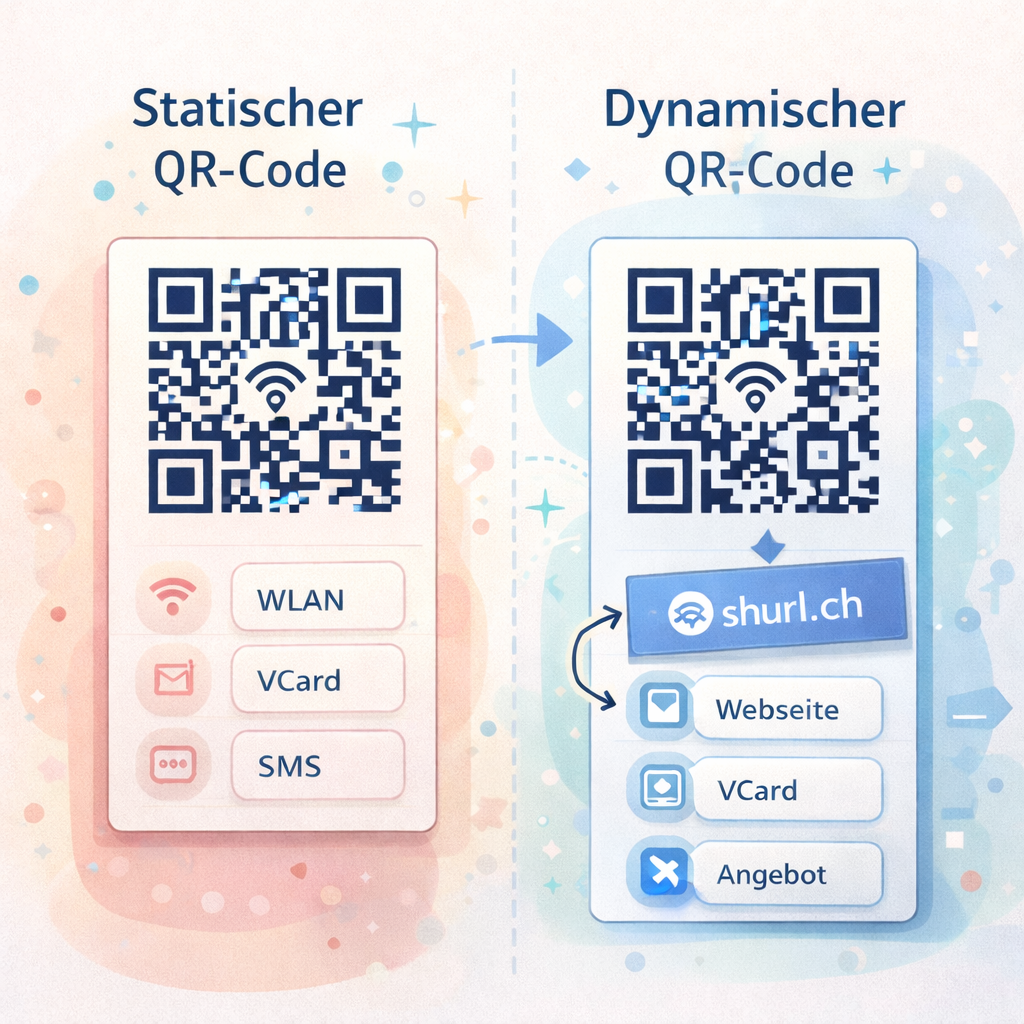
QR codes are everywhere today – on posters, business cards, menus, or packaging. But not all QR codes work the same way. There is a clear difference between static and dynamic QR codes, and understanding it helps you choose the right solution.
What is a static QR code?
A static QR code contains the information directly inside the code itself. This can be a text, a static VCard, a Wi-Fi password, or a pre-filled SMS message. When someone scans the code, the action is triggered immediately on the user’s device.
Typical use cases for static QR codes include:
sharing Wi-Fi access with guests
simple, non-editable VCards
displaying short texts
pre-defined SMS messages, for example to join a giveaway
All these actions have one thing in common: they are not trackable. There is no connection to shurl.ch or any other service, and you cannot see how often the QR code was scanned or what happened afterward.
What is a dynamic QR code?
A dynamic QR code works differently. Instead of containing the action directly, it first redirects to shurl.ch. From there, the desired action is executed, such as opening a website, saving a VCard, or displaying an offer.
The key advantage: dynamic QR codes are trackable. You can clearly see:
how often the QR code was scanned
when and from where it was used
which actions are connected to the scan
This makes dynamic QR codes especially useful for marketing, communication, and campaigns where measuring success matters.
In short:
Static QR codes are ideal for simple, one-time actions.
Dynamic QR codes are the right choice when you want visibility and insights.
👉 Try shurl.ch for free now and make your QR codes measurable.